Outer Delft Water Walk
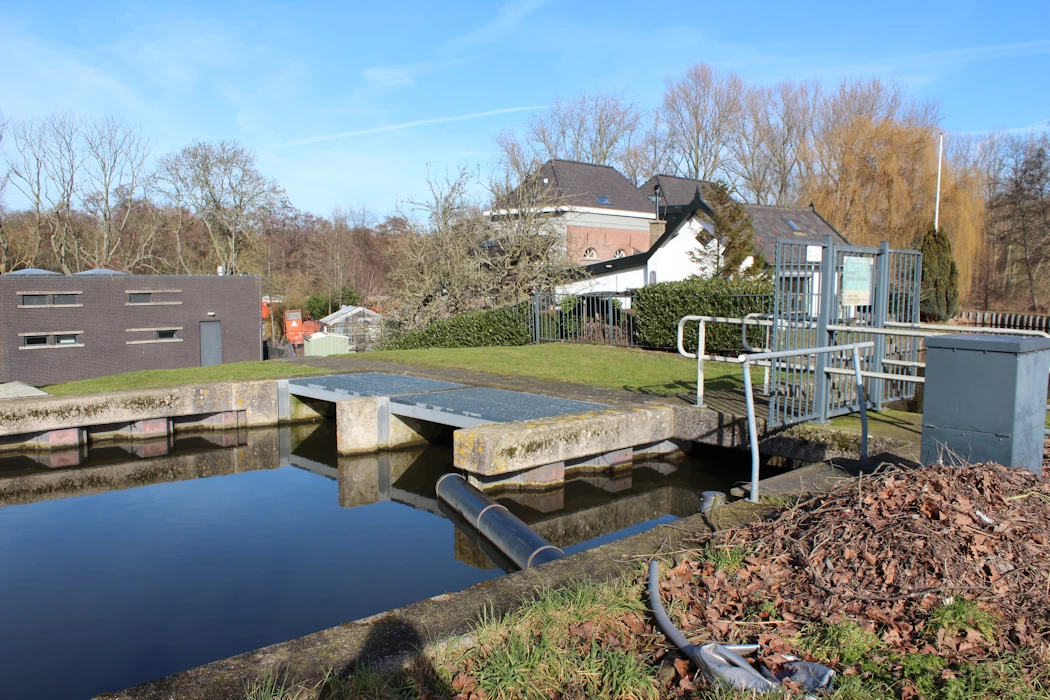
We cross the Tweemolentjeskade and walk 300 meters in north-eastern direction along the Tweemolentjesvaart canal, passing under the A13 motorway to the Noortdorp Pumping Station. To see this pumping station, climb to the crest of the dike. This is a very special spot. Here, polder water is pumped from the lowest point in the surrounding polder, with a summer water level of -4.90 m NAP (winter water level of -5.00 m NAP), to the Boezem level of the Rhine-Schie Canal, -0.43 m NAP. The pumping station has a maximum capacity of 150 m³/minute. In the event of heavy rain, or if the pumping station is not functioning, a mobile emergency pump can be connected to pump water from the Binnenboezem to the Boezem. The connection for this emergency pump is found at the foot of the dike.
In normal (dry) weather, the pumping station regulates water circulation in the polder. Through a cascade of sluices and weirs, the water circulates through the polder ditches and is therefore constantly replenished with fresh water from the Binnenboezem. The water in this canal always flows into the polder, thus toward the East. There are no other pumping stations in the Polder of Nootdorp. All these water levels and the water distribution within the various polders are discussed and explained in “Water management in the polders northeast of Delft.”
This pumping station is equipped with a fish passage to enable fish migration. A small pump generates a water current, the “luring current.” Once inside, the gate is closed behind the fish and opened at the front.
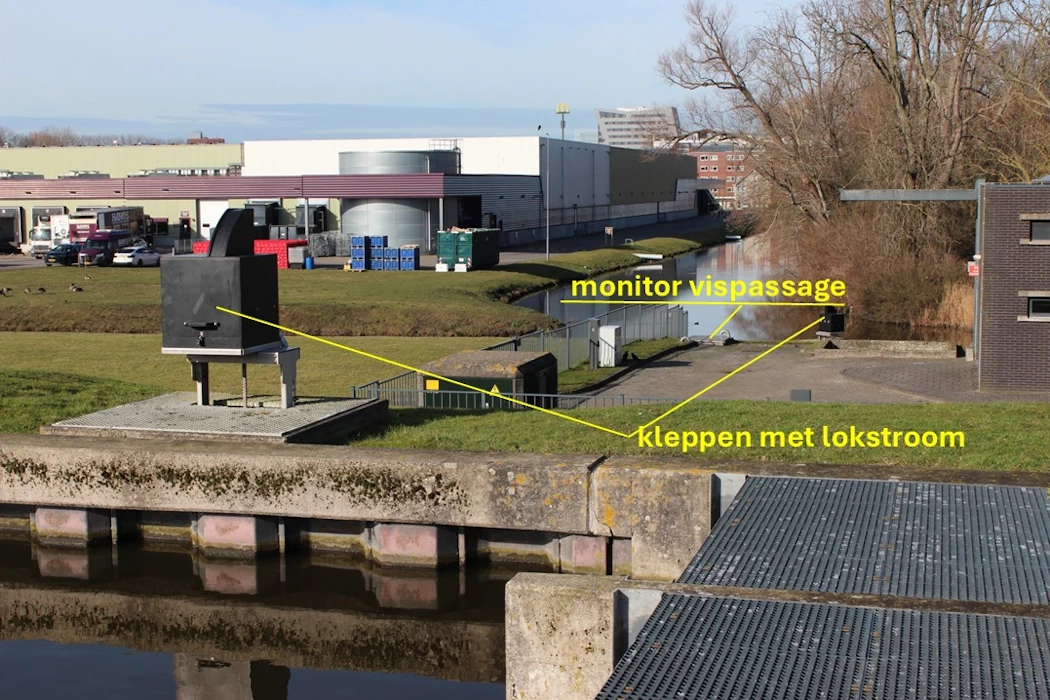
Fish passage at the Nootdorp pumping station.
Fish migrate from area to area to breed, grow, hibernate, and find food. This is called fish migration. This migration had become increasingly difficult due to the many hydraulic structures in our waterways, such as locks, pumping stations, overflows, and so on. During the last decades however, fish passages have been built throughout the country to allow fish to pass these structures.
In “Fish Migration and Fish Passage” you can read which fish migrate through our polder waters and how such a fish passage works.