Old Delft Water Walk
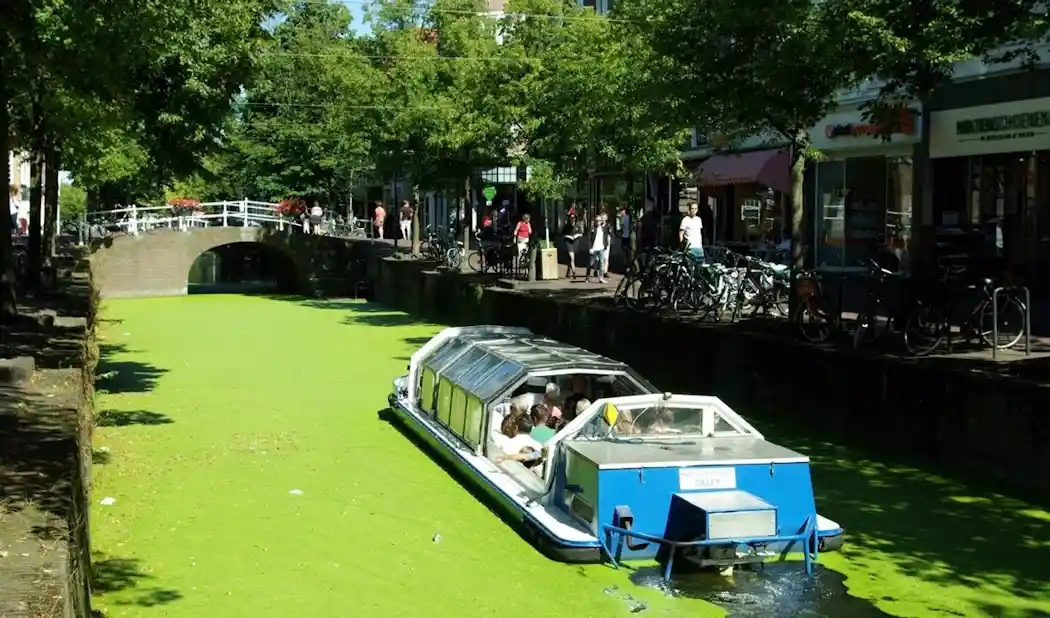
In the second half of the summer, the Delft canals are covered with much duckweed. Duckweed is a collective term for floating plants, smaller than one centimeter. Duckweed itself is not harmful. But too much is. Thick layers hinder oxygen absorption into the canal water and also block sunlight. This makes life difficult for other organisms. When duckweed dies at the end of the season, it consumes much oxygen. The canal water then becomes oxygen-depleted (“anaerobic”) and starts to smell terribly.
The cause of the duckweed problem is the high level of nutrients (such as phosphate and nitrogen) in the surface waters. This is one of the major water quality problems in Delft, and indeed throughout The Netherlands. Tests have been conducted to reduce the duckweed problem intensifying circulation in the Delft canals through the Duyvelsgat pumping station, which also allows for mechanical removal of the duckweed. The Delfland Water Board compiled an overview of all studies on duckweed problems.
This photo shows the canal in the Molslaan full of duck weed and algae during the very dry summer of 2026.

Duck weed and algae bloom in the canal along the Molslaan.