New Delft Water Walk
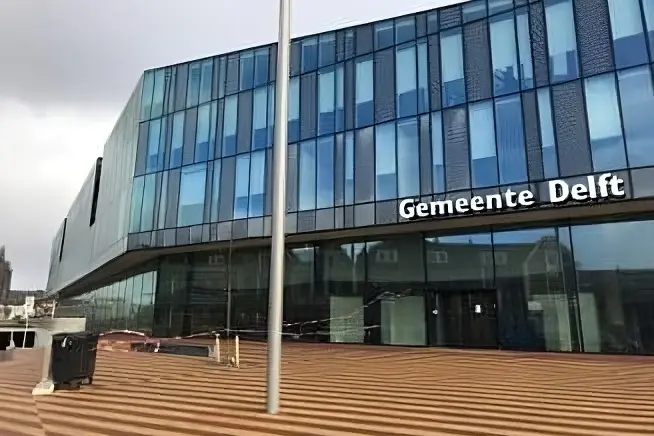
The Delft City Hall is integrated within the new train station. Water management is one of the responsibilities of the city of Delft, such as controlling rainwater run-off and preventing local flooding. In the past, the priority was to drain rainwater as fast as possible, for instance through the street sewer system. Nowadays, the priority is capturing and storing rainwater locally as much as possible. This reduces large peaks in the rainwater flowing into the sewage system and then to the wastewater treatment plant at the Harnaschpolder. This wastewater treatment plant is operated by the local Water Board Delfland (Hoogheemraadschap van Delfland). The city of Delft also invests in various measures to manage the groundwater levels in the city to prevent problems caused by high groundwater levels.
The Governing Board of Delft comprises the mayor and six aldermen. In addition, the Delft City Council has (since 2018) 39 members, who are elected during the local elections. The city council appoints the aldermen. The mayor is appointed by the Crown (National Government), on the advice and with the consent of the City Council. In principle, the Board and the Council meet every last Thursday evening of the month in the Town Hall at the Markt. Committees of the Council meet more often.
Most city officials also work in the City Hall. Together with the Board and the City Council, they are working hard to keep Delft viable and ready for expected climate changes. The City Hall is located next to and on top of the new train station, fully integrated within the same building. These were built together with the new train tunnel. In the public hall and reception area you will find the service counters where you can arrange all kinds of matters as a citizen. You can enter the hall via the Nieuwe Gracht or via the station.
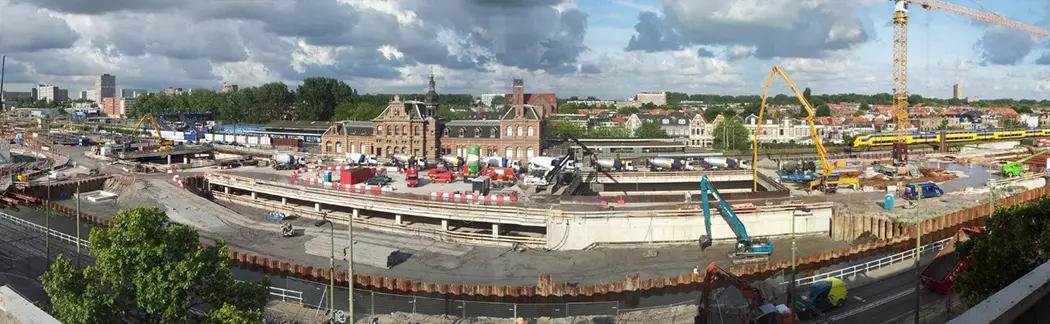
The Town Hall is integrated with the railway station and built atop of the railway tunnel.
In recent years, Delft has experienced many extreme weather conditions. The city must adapt to the changing climate. Flooding has been on the agenda for many years and largely determines the spatial planning. But in recent years, heat stress and longer periods of drought have also been issues of concern. In order to adapt to these extreme weather conditions, the city prepared a climate adaptation strategy, which led to, for example, the design of the Van Leeuwenhoekpark.
This strategy also provides rules for new constructions, such as requirements for temporary storage of rainwater. The city is also investing to replace the old combined sewer system with a new separated sewer system where rainwater and wastewater are discharged separately. The city is working with companies as well as citizen groups. With this strategy, Delft is also fulfilling the national goals for climate adaptation.