Outer Delft Water Walk
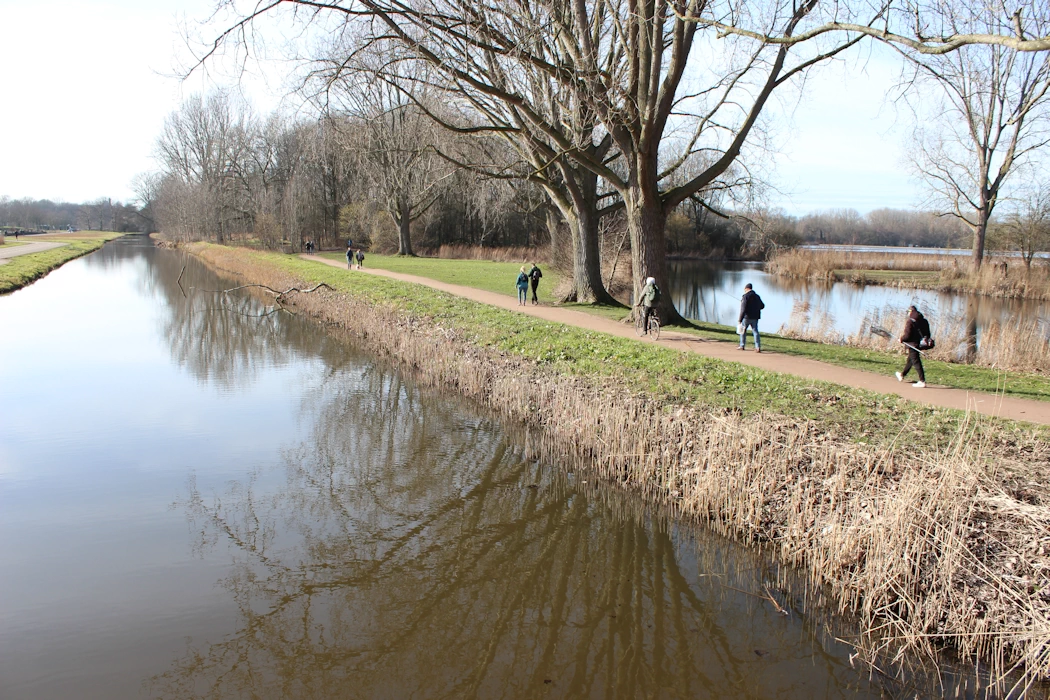
Turn right in southwestern direction and follow the Korftlaan, with the Binnenboezem “de Bieslandse Molensloot” at your right. The Great Lake (Grote Plas) soon comes into view. Here, you will see a spectacular difference in water level between the Binnenboezem, at -2.14 m NAP and the reference level in the Grote Plas, which varies between -3.70 and -4.20 m NAP.
The Great Lake in the Delftse Hout is a popular swimming spot for many Delft residents. Unfortunately, swimming becomes often impossible in the second half of summer due to the bloom of blue-green algae. This algae causes severe skin irritation, known as “swimmer’s itch.” The blue-green algae thrives in the nutrient-rich water of the Lake in particular at higher water temperatures, so in summer.
The Delfland Water Board and the Municipality of Delft have been working for years to eradicate the blue-green algae problems. For example, a large amount of sludge was dredged from the lake’s bed because nutrients adhere to it. A more biological approach is now being adopted, with aquatic plants and mussels filtering nutrients from the water. “Water Quality of the Grote Plas” provides an overview of the problems and measures.
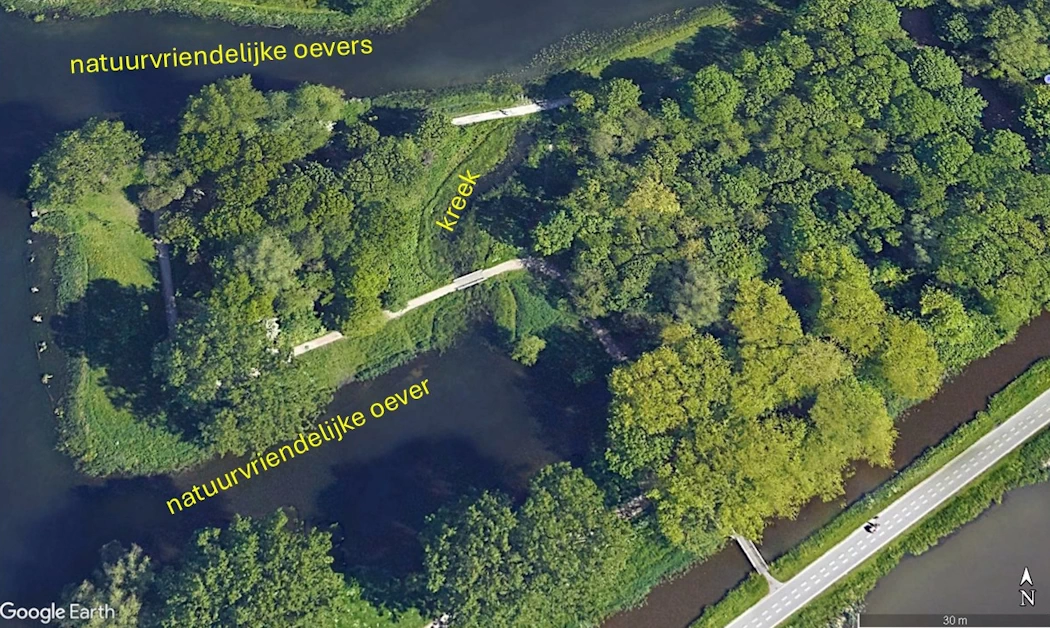
Biologische approach of blue-green algae hinder.
If you cross the small bridges at the beginning of the Korftlaan and walk into the forest, you will see the nature-friendly banks (natuurvriendelijke oever) and a small creek created as part of the biological approach.
There are two routes to stop 7, the Bieslandse Bovenpolder Pumping Station:
- Continue straight down the Korftlaan, a paved road with a fair amount of (bicycle) traffic.
- Return to the Noordeindseweg, turn right, and walk about 250 meters towards Delfgauw. Just before the café-restaurant Du Midi, turn right over the small bridge and enter the Noordpolder of Delfgauw. This alternative route (see map) is about 500 m longer than the route along the Korftlaan. Back on the Korftlaan, turn left to the last stop of the walk.